Messenger





What Is Marketing Technology? Trends and Applications in Business
Marketing technology is becoming an important factor in helping businesses improve marketing effectiveness, optimize budgets, and enhance customer experiences. Through digital tools, artificial intelligence, and data analytics systems, businesses can manage campaigns more effectively and make decisions based on real-world data. So, what is marketing technology, and how is it applied in business operations?
What Is Marketing Technology?
Marketing technology, or MarTech, refers to a collection of technology platforms, software, and tools used to support marketing activities. These solutions help businesses manage customer data, run advertising campaigns, automate processes, and measure marketing performance.
For example, businesses can use customer relationship management (CRM) systems to store customer information, email marketing tools to send automated messages, or data analytics platforms to evaluate advertising performance.
The use of marketing technology not only reduces manual work but also helps businesses better understand customer behavior and develop more effective marketing strategies.
The Role of Marketing Technology in Business
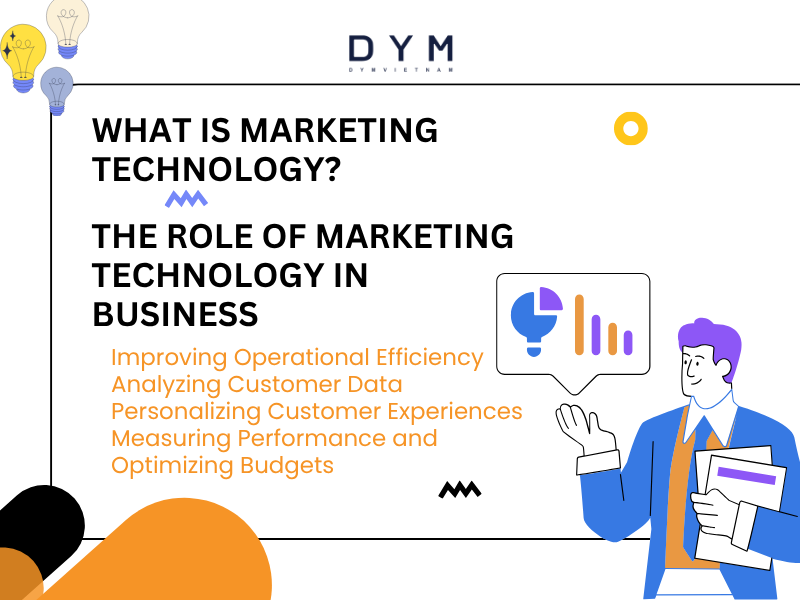
Improving Operational Efficiency
Marketing tools help automate repetitive tasks such as sending emails, scheduling social media posts, and compiling reports. As a result, marketing teams can save time and focus more on planning, content creation, and strategy development.
Analyzing Customer Data
Technology enables businesses to collect and analyze data from multiple marketing channels. Information about browsing behavior, engagement, and conversions can help businesses identify customer needs, evaluate the performance of individual channels, and adjust their marketing activities accordingly.
Personalizing Customer Experiences
By leveraging customer data, businesses can segment their audiences and deliver content tailored to different needs. For example, customers who have shown interest in a particular product can receive more detailed information about that product instead of generic advertising messages.
Measuring Performance and Optimizing Budgets
Advertising and analytics platforms provide metrics such as impressions, clicks, cost per lead, and conversion rates. These metrics help businesses identify which activities are delivering the best results and allocate their budgets more effectively.
Contact DYM DIGITAL VIETNAM here!
Common Types of Marketing Technology
Marketing technology can be divided into several categories based on its intended use.
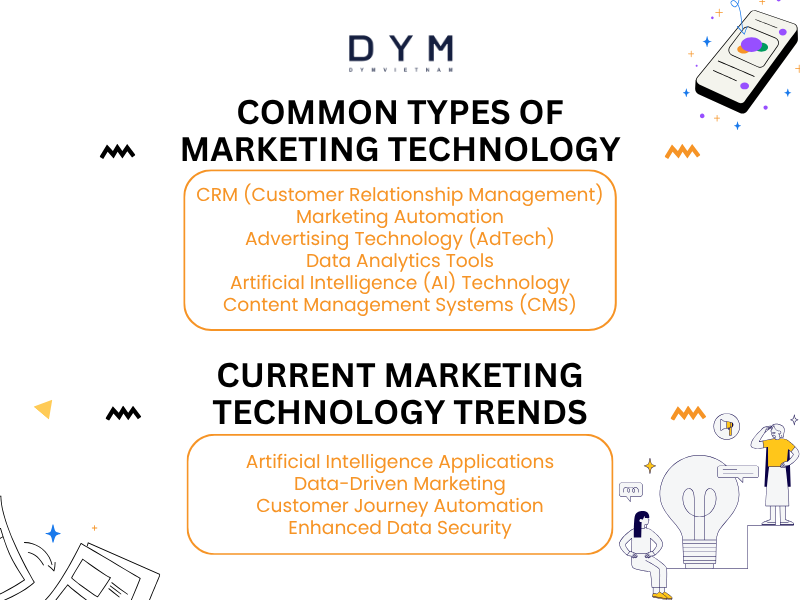
- CRM (Customer Relationship Management): Manages customer information, interaction history, and customer engagement activities.
- Marketing Automation: Automates activities such as email delivery, customer segmentation, and nurturing workflows.
- Advertising Technology (AdTech): Supports the setup, management, delivery, and optimization of advertising campaigns across digital platforms.
- Data Analytics Tools: Track website traffic, user behavior, campaign performance, and conversion rates.
- Artificial Intelligence (AI) Technology: Supports content creation, data analysis, trend prediction, and marketing personalization.
- Content Management Systems (CMS): Enable businesses to create, update, and manage website content.
Each category of technology addresses a different business need. Companies should select the tools that best align with their objectives, available resources, and the maturity of their current marketing systems.
Current Marketing Technology Trends
Artificial Intelligence Applications
AI is increasingly being used to support content creation, analyze customer behavior, and optimize advertising campaigns. However, AI-generated outputs still need to be reviewed to ensure accuracy and alignment with the brand.
Data-Driven Marketing
Rather than making decisions based solely on experience, businesses are increasingly relying on data to identify target audiences, evaluate performance, and refine their strategies.
Customer Journey Automation
Marketing automation systems help businesses maintain engagement with customers at each stage of the customer journey, from initial product research to purchase and repeat use of services.
Enhanced Data Security
As marketing activities become increasingly dependent on data, businesses need to pay greater attention to privacy, customer consent, and compliance with regulations concerning the protection of personal data.
How to Select and Implement Marketing Technology Effectively
To avoid spreading investments too thin, businesses should start by identifying the problems they need to solve, such as a lack of customer data, difficulties measuring advertising performance, or excessive time spent on manual tasks.
Next, businesses should select tools that fit their budget and operational capabilities. These platforms should integrate with existing systems, minimize data fragmentation, and make it easy for teams to monitor results.
After implementation, businesses should establish specific performance indicators, such as task processing time, customer acquisition cost, conversion rate, and marketing-generated revenue. Regular evaluations help determine whether the technology is actually delivering value.
Advertising Solutions and Marketing Optimization at DYM DIGITAL VIETNAM
DYM DIGITAL VIETNAM supports businesses in running advertising campaigns on Facebook, Google, TikTok, and YouTube. By analyzing data and evaluating campaign performance, DYM DIGITAL VIETNAM recommends optimization strategies tailored to each business’s goals and budget.
Conclusion
Marketing technology helps businesses manage marketing activities more efficiently, gain a deeper understanding of their customers, and optimize budget allocation. To fully leverage the benefits of MarTech, businesses need to choose the right tools, build a reliable data infrastructure, and regularly measure performance.
DYM DIGITAL VIETNAM’s “Advertising Outsourcing Service” page here.