Messenger





Effective Marketing: The Key to Optimizing Your Business Marketing Strategy
In a competitive business environment, marketing plays an important role in reaching customers, building brand awareness, and driving revenue growth. However, carrying out numerous marketing activities does not necessarily lead to good results. To create real value, businesses need to develop an effective marketing strategy that aligns with their business objectives, target audience, and available budget.
What Is Effective Marketing?
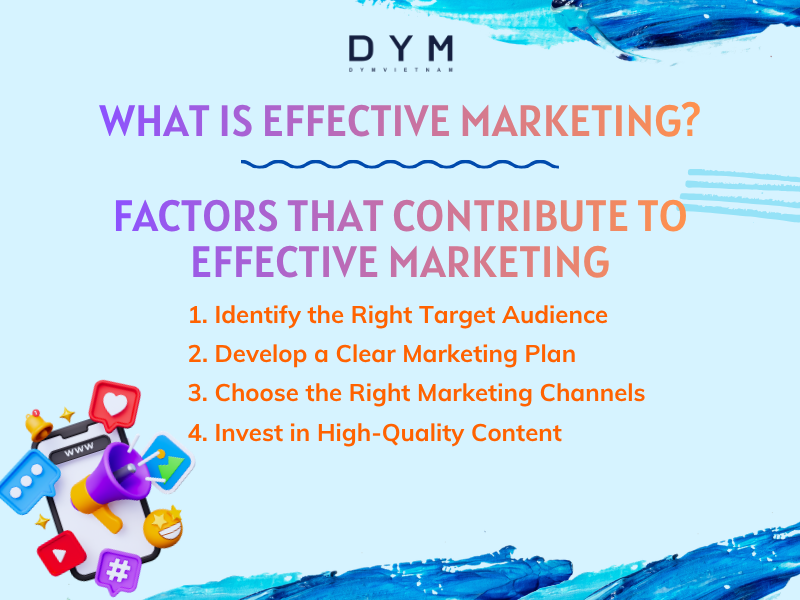
Effective marketing is the process of implementing marketing activities to achieve specific goals while making optimal use of available resources. These goals may include increasing brand awareness, attracting potential customers, improving conversion rates, or increasing revenue.
An effective marketing strategy focuses not only on views or engagement but also on evaluating performance based on actual data. By monitoring results and making timely adjustments, businesses can improve campaign performance and minimize wasted marketing spend.
Factors That Contribute to Effective Marketing
Identify the Right Target Audience
Understanding customers is the first step toward developing an effective marketing strategy. Businesses need to understand their customers’ needs, purchasing behavior, preferences, and the challenges they face.
By identifying the right target audience, businesses can choose appropriate messaging, develop valuable content, and reach potential customers through more effective channels.
Develop a Clear Marketing Plan
A marketing plan should define objectives, budget, implementation timeline, marketing channels, and performance metrics. The more specific the objectives are, the easier it is for businesses to allocate resources and monitor progress.
For example, instead of setting a vague goal of increasing sales, a business can aim to increase the number of leads within a specific period. This gives the marketing team a clear basis for selecting appropriate activities and measuring results.
Choose the Right Marketing Channels
Each marketing channel has its own characteristics and strengths. SEO helps websites reach users through search engines, Google Ads enables businesses to target customers who are actively looking for relevant products or services, while Facebook and TikTok can help increase brand awareness and encourage user engagement.
Businesses do not necessarily need to use all channels at once. Instead, they should prioritize platforms that align with customer behavior, product characteristics, and available budgets to maximize return on investment.
Invest in High-Quality Content
Content plays an important role in capturing customers’ attention and building trust. Effective content should provide useful information, address real-world problems, and clearly communicate the value of a product or service.
Depending on their objectives, businesses can create SEO articles, short-form videos, social media posts, email marketing campaigns, or advertising content. Maintaining consistent messaging across channels also helps improve the overall customer experience.
Contact DYM DIGITAL VIETNAM here!
How to Measure Marketing Performance
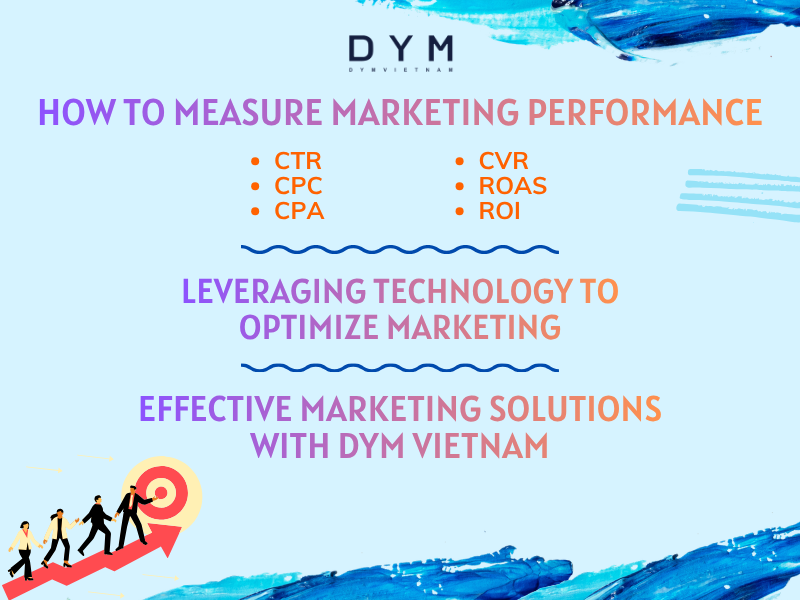
Measuring results helps businesses understand whether their marketing activities are achieving their objectives. Common performance metrics include:
- CTR (Click-Through Rate): The percentage of users who click on an advertisement or link.
- CPC (Cost Per Click): The average cost of each click.
- CPA (Cost Per Acquisition/Action): The cost of achieving a desired conversion action.
- CVR (Conversion Rate): The percentage of users who complete a desired action.
- ROAS (Return on Ad Spend): The revenue generated from advertising relative to advertising costs.
- ROI (Return on Investment): A measure of investment profitability used to evaluate the overall effectiveness of an investment.
Businesses should select the metrics that best align with each campaign’s objectives rather than relying on a single metric. For example, a brand awareness campaign should be evaluated differently from a campaign focused on generating sales.
Leveraging Technology to Optimize Marketing
Technology is making marketing more agile and increasingly data-driven. Website analytics tools, customer relationship management (CRM) systems, and marketing automation platforms can help businesses track user behavior, manage leads, and evaluate campaign performance.
In addition, artificial intelligence (AI) can support customer research, content ideation, and data analysis. However, businesses still need to verify information, define clear objectives, and evaluate results before making decisions.
Effective Marketing Solutions with DYM DIGITAL VIETNAM
DYM DIGITAL VIETNAM supports businesses in implementing and optimizing advertising campaigns across platforms such as Facebook, Google, TikTok, and YouTube. With experience working with both Japanese and Vietnamese businesses, DYM DIGITAL VIETNAM focuses on data analysis, performance evaluation, and recommending campaign improvements tailored to business objectives.
Conclusion
Effective marketing requires a combination of a clear strategy, high-quality content, appropriate channel selection, and data-driven measurement. By regularly evaluating and optimizing their marketing activities, businesses can allocate budgets more efficiently, reach the right audiences, and build a foundation for sustainable growth.
DYM DIGITAL VIETNAM’s “Advertising Outsourcing Service” page here.


Table of content